Why Most Adults Never Start Jiu Jitsu (And Why You Should)

Why Most Adults Never Start Jiu Jitsu (And Why the Reasons Are Not What You Think)

Most adults who want to try Jiu Jitsu never do.

Not because they lack the time. Not because they cannot afford it. Not because they are too old or too out of shape.

They do not start because starting something you know nothing about, as a grown adult, is genuinely uncomfortable. And nobody talks about that part honestly.

This is an attempt to do that.

The Real Reason Adults Do Not Start
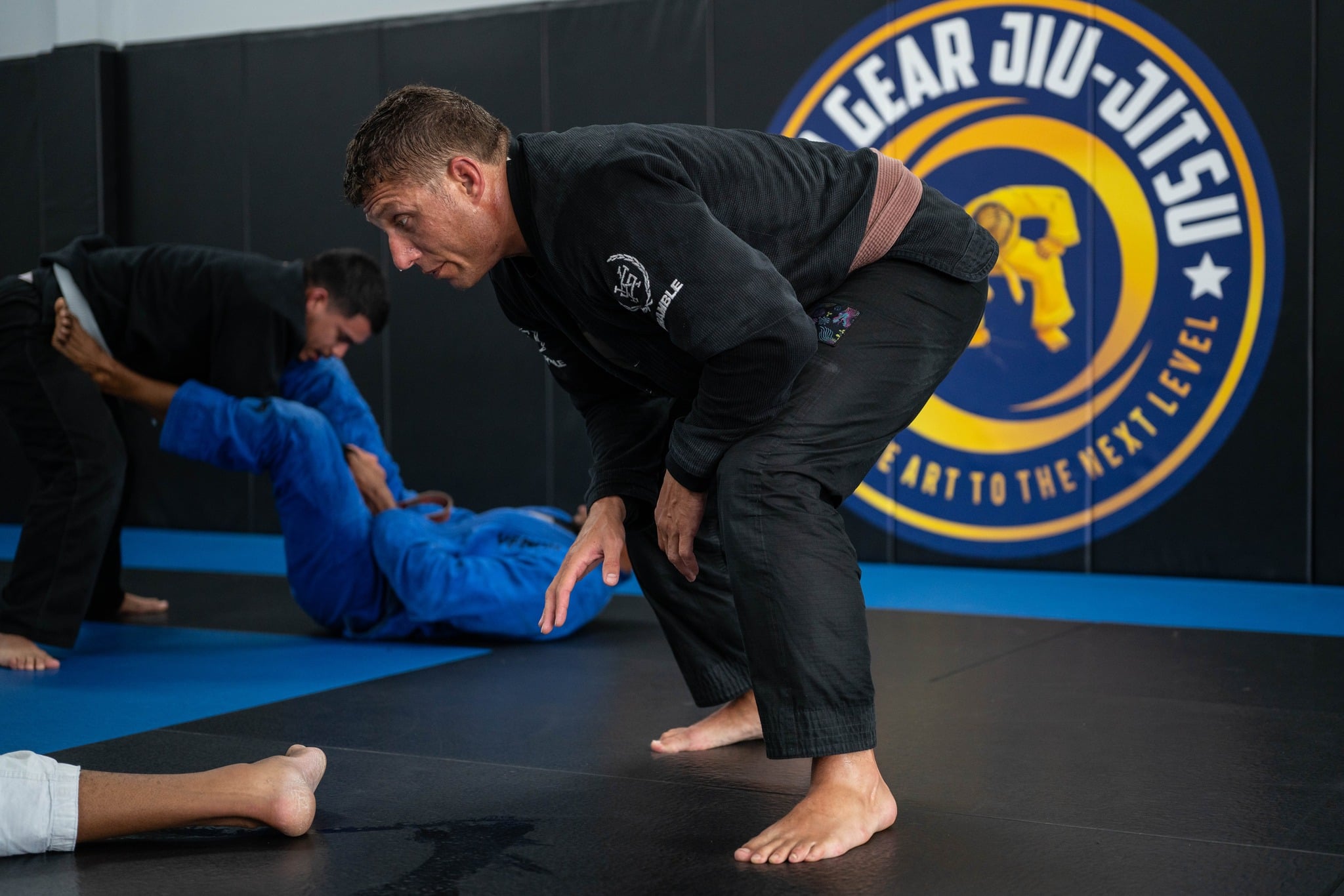
In class moment from 4 pm BJJ class
It is not the fitness concern. Most people know that excuse is not real.

The actual reason is harder to say out loud.

Adults do not like being bad at things. Children accept being beginners because they are always beginners at something. Adults have spent years building competence in their careers, their relationships, their routines. Walking into a room where everyone is better than you, and staying anyway, goes against everything adult life trains you to do.

Jiu Jitsu asks you to be a beginner again. Completely. Without shortcuts.

That is what stops people. Not the fitness. Not the age. The ego.

And the interesting thing is that working through that discomfort is most of what makes Jiu Jitsu worth doing in the first place.

What Actually Happens in the First Few Weeks
The first class is disorienting. There is no way around that.

You will not know where to stand, how to fall, or what to do with your hands. Someone will put you in a position you cannot get out of and it will feel completely unfamiliar. None of that means anything about whether you belong there.

What most new students do not expect is how quickly that disorientation fades. Not because Jiu Jitsu gets easier, but because your brain starts building a map. You begin to recognize what is happening. You stop reacting and start thinking.

That shift, from chaos to pattern recognition, usually takes about three to four weeks. Most people who quit do so before that shift happens. Most people who stay past it never want to leave.

Why It Holds Attention When Nothing Else Has

Most forms of exercise fail adults for the same reason. There is no problem to solve. You are just moving until the clock runs out.

Jiu Jitsu is different because every round is a live puzzle with another person actively trying to stop you from solving it. Your brain cannot wander. There is no room to think about work, or your phone, or what you are making for dinner. The only thing that exists is the person in front of you and the problem you are both trying to solve.

That full absorption is rare. Most adults have not experienced it since they were children playing a sport that actually mattered to them. It is a significant part of why people who train regularly describe it less like a workout and more like the best hour of their week.

There is also something that happens over months of training that is difficult to explain to someone who has not experienced it. You become harder to rattle. Not because you become more aggressive, but because you have spent hundreds of hours in uncomfortable positions and figured your way out. That composure does not stay on the mat. It follows you.

See how our Jiu Jitsu classes in Laurel work.

What Jiu Jitsu Actually Develops
The physical benefits are real but they are not the reason people stay for years.

What people stay for is harder to put on a flyer. It is the experience of working on something that has no ceiling. You cannot finish Jiu Jitsu. There is no point at which you have learned everything. A black belt is not the end. It is closer to a driver’s license. Most of the real learning happens after.

For adults who have spent years in careers where growth is incremental and hard to see, that kind of open-ended improvement is genuinely unusual. You can feel yourself getting better in ways that have nothing to do with how you look or what the scale says.

What You Need to Start
A t-shirt and athletic shorts.

That is the complete list.

If you try Gi Jiu Jitsu we have loaner uniforms. You do not need to buy anything before your first class. You do not need to prepare. The first class is guided from start to finish.

The One Thing Worth Knowing Before You Decide

Every person at 2nd Gear who has been training for more than a year says some version of the same thing when you ask them about starting.

They wish they had done it sooner.

Not because they were missing out on fitness. Because they were missing out on something that turned out to matter more to them than they expected. A skill that compounds. A room full of people who want each other to improve. A version of themselves they did not know was available.

That version does not require you to be ready. It just requires you to show up once.

Try a free class and see how it feels.

7 Things That Surprise People Most When They Start Jiu Jitsu

7 Things That Surprise People Most When They Start Jiu Jitsu

Most people who try jiu jitsu for the first time did not expect to like it as much as they did. Some of them spent months thinking about it before they actually showed up. A few of them almost talked themselves out of it entirely.

What they found when they got on the mat was usually different from what they had imagined. Not easier, not harder, just different in ways that are difficult to describe until you experience them yourself.

This article is a straightforward look at what beginners actually notice when they start training jiu jitsu. Not promises, not hype. Just what tends to happen when someone shows up and puts in consistent time on the mat.

Your Body Works Harder Than You Expect and Recovers Faster Than You Think
Brazilian Jiu Jitsu in action
Jiu jitsu is a full body workout in a way that most exercise is not. You are not just using your arms or your legs. You are using everything at once, including muscles you rarely think about, to move, brace, shift, and respond.

The first few classes feel like a lot. Your grip will tire out. Your hips will be sore in places that no gym machine has ever touched. You will finish a round and feel like you ran a mile without moving ten feet.

What surprises most beginners is how quickly that changes. Within a few weeks, the same rounds that left you winded start to feel more manageable. Your body adapts fast because it has to. Every class demands something slightly different, so you never plateau the way you do on a treadmill or a fixed lifting routine.

It Teaches You to Stay Calm When Things Go Wrong
The guillotine choke at no-gi class.
There is a version of panic that happens when someone puts pressure on you that you cannot immediately remove. It is instinctive. Your breathing speeds up, your muscles tighten, and your thinking gets worse exactly when you need it to get better.

Jiu jitsu puts you in that situation repeatedly, in a safe environment, with a training partner who is not trying to hurt you. Over time, you learn to breathe through it. You learn that the pressure is manageable and that there is usually something useful you can do even when nothing seems available.

That skill does not stay on the mat. People who train consistently describe becoming noticeably more patient in difficult situations outside of the gym. Not dramatically, not overnight, but steadily. The practice of not panicking when things feel out of control turns out to have a much wider application than most people anticipate when they first start.

You Find Out Quickly What You Are Actually Good At
Most fitness activities do not give you honest feedback. You lift a weight or run a distance and the result is a number. Jiu jitsu gives you a live partner who responds to everything you do.

If a technique works, you feel it working. If it does not, you know immediately and you know approximately why. That feedback loop is fast and specific in a way that most training environments never are.

This is one of the reasons beginners tend to improve quickly in the early months. The gap between what you are doing and what you should be doing is visible every single class. That kind of clarity is unusual and it makes the learning process feel real in a way that keeps people coming back.

The People You Train With Become Part of Your Routine
The crew at 2nd Gear Jiu Jitsu
Jiu jitsu training involves a level of physical closeness and mutual trust that is unlike most other social environments. You are working with someone who is trying to submit you while you try to submit them, and then you shake hands and do it again.

That shared experience creates a specific kind of connection. It is not sentimental. It is practical. You learn to trust your training partners quickly because the training requires it, and that trust tends to extend beyond the mat.

Most people who train consistently for six months or more describe their training partners as some of the more genuine relationships in their life. Not because jiu jitsu is magic, but because there is very little room for pretense when you are on the mat together. You see who people actually are and they see who you actually are.

It Is One of the Few Workouts That Demands Your Full Attention
Training Jiu Jitsu and Martial Arts Is Always A Joy
Most exercise leaves your mind free to wander. You can run and think about work. You can lift and check your phone between sets. That is not necessarily a problem, but it does mean the mental break that exercise can provide is often incomplete.

Jiu jitsu requires your complete attention for the entire class. You cannot think about your inbox while someone is working to pass your guard. That forced presence is one of the things people notice first and appreciate most. You walk off the mat and the things that were weighing on you before class are still there, but they have less weight. An hour of being completely present has a way of resetting your perspective.

You Do Not Have to Be in Shape to Start, But You Will Be in Better Shape After
This is one of the most common concerns people have before their first class and one of the first things they stop worrying about once they show up.

Nobody arrives at their first jiu jitsu class in peak condition. Most beginners arrive having not done serious physical activity in a while. That is normal and it is not a problem. Classes at 2nd Gear are structured for beginners, and the pace of training scales to where you actually are, not where you think you should be.

What does happen over time is that your conditioning improves as a byproduct of showing up consistently. You are not thinking about getting fit. You are thinking about learning the technique in front of you. The fitness follows the training, and for a lot of people, that is the first time exercise has ever felt like something other than a chore.

There Is Always Something New to Work On, No Matter How Long You Have Trained
Jiu jitsu does not have a ceiling. There are black belts who have trained for twenty years and still come to class to work on specific problems they have not solved yet.

For a beginner, this is actually reassuring rather than overwhelming. You are not behind. You are at the beginning of something that has a very long road ahead, and that road has clear markers along the way. Each class teaches something specific. Each week builds on the last. Progress is visible and it is earned, which makes it mean something.

The people who stick with jiu jitsu long term are rarely the ones who were naturals at the start. They are the ones who found the process of getting better at something difficult to be worth the effort. That turns out to be a more common feeling than most people expect when they walk in for the first time.

Ready to See What Your First Class Feels Like?
At 2nd Gear Jiu Jitsu and Muay Thai in Laurel, Maryland, our adult jiu jitsu program is built around beginners. You do not need experience, a certain fitness level, or any background in martial arts. You just need to show up once and find out what it actually feels like.

We offer a free trial class so you can experience the training before you commit to anything. Come in, move around, and see which of these seven things surprise you first.

Jiu Jitsu Fundamentals: What Beginners Are Actually Learning

Jiu Jitsu Fundamentals: What Beginners Are Actually Learning

Most people who start Jiu Jitsu describe the first few weeks the same way. There is a lot happening, not much of it makes sense yet, and the gap between watching a technique and being able to do it feels significant.

That experience is normal. Jiu jitsu is a skill that takes time to build, and the early period feels disorienting in a specific way because you do not yet have the framework to understand where each piece fits.

This article is that framework. It covers what you are actually learning in the early stage of your jiu jitsu training, why each category matters, and how they connect to each other. If you are new to the art or thinking about starting, this will give you a clearer picture of what the first year of training is actually working toward.

The Most Important Concept You Will Learn First

Before techniques, before submissions, before anything else, jiu jitsu has a logic to it. That logic is called the positional hierarchy.

Every position in jiu jitsu exists on a spectrum from inferior to dominant. Some positions give you advantages. Some put you at a disadvantage. Some are roughly neutral depending on what each person does next. Understanding where you are on that spectrum at any given moment is the foundational skill that every other skill is built on top of.

Here is how the hierarchy is organized:

InferiorNeutralDominant
Bottom of Rear MountOpen GuardTop of Rear Mount
Bottom of MountClosed GuardTop of Mount
Bottom of Side ControlHalf GuardTop of Side Control
Bottom of Knee on BellyOn the FeetTop of Knee on Belly

The reason this matters so much early is that it gives you a simple decision-making tool. In any situation, your goal is to move up the hierarchy. If you are in an inferior position, you are working to escape to neutral. If you are in a neutral position, you are working to get to a dominant one. If you are in a dominant position, you are working to stay there and finish.

Why Jiu Jitsu Feels Like a Foreign Language at First
Learning Jiu Jitsu is genuinely similar to learning a new language. Not as a metaphor, but as a description of how the brain actually works when it is acquiring a new skill.

When you learn a language, you start by learning individual words. You can recognize them and repeat them, but you cannot use them yet in conversation because you do not know the grammar, the pronunciation, or how words connect to form meaning. The words sit in your memory as isolated pieces with no relationship to each other.

Jiu jitsu works the same way in the beginning. You learn a technique. You can repeat the steps when someone walks you through it. But in a live roll, when things are moving and there is pressure and your training partner is doing something unexpected, the technique is not available to you yet because you have not built the connections that make it usable.

Those connections are what training builds over time. A few things help speed that process up.

When you learn a new technique, look for what it shares with something you already know. Most techniques in jiu jitsu use the same underlying movements in different combinations. Recognizing those overlaps is how techniques start to feel related instead of separate.

When you drill, drill in sequence rather than in isolation. One technique into another into another. This teaches your body to move between positions without stopping to think, which is what actually happens in a roll.

When a movement shows up in multiple techniques, pay attention to it. That movement is load-bearing. The more you see a concept appear across different situations, the more central it is to the art.

The Movements That Everything Else Depends On

Before techniques, there are movements. Jiu jitsu uses a set of fundamental body movements that do not exist in most other athletic contexts. They will feel foreign at first. That unfamiliarity is not a reflection of your athletic ability. It is simply a movement vocabulary you have not built yet.

These are the core movements and what each one is used for:

Shrimp
Standard ShrimpThe most foundational movement in Jiu Jitsu. You push off one foot and rotate your hips away from your opponent to create space. Used in escapes from side control, mount, and dozens of other situations.
Offside ShrimpA variation that initiates inversions. Most commonly used to counter guard passes.
Reverse ShrimpThe opposite direction. You move your hips toward your opponent to change the angle of leverage. Used in sweeps, reversals, and specific escapes like the armbar defense from mount.
Shrimp OutA combination of a shrimp and a sprawl. Creates separation and can be used to escape or reverse position.
Bridge
Upward BridgeYou drive your hips toward the ceiling to create space or off-balance an opponent who is on top of you.
Shoulder BridgeYou tilt sideways rather than straight up, used to disrupt an opponent’s lateral balance.
Roll
Forward RollShows up most commonly in rolling back attacks and certain sweeps.
Backward RollUsed to generate leverage in specific sweep situations.
Granby RollA sideways rolling movement used to retain guard and move on the ground when your hips alone are not enough.
Upa RollA bridge-based roll that generates significant leverage for escapes, particularly from mount.
Crawl
Shoulder CrawlCreates separation from an opponent’s grip and reduces their control of your upper body.

These movements are the grammar of Jiu Jitsu. The techniques are the sentences. Until the grammar is in your body, the sentences do not come out right.

Why Escaping Comes Before Attacking
Most beginners want to learn submissions first. That instinct is understandable but it tends to slow development down.

The reason escapes are prioritized in early training is practical. You will spend a significant portion of your time on the mat in bad positions in the beginning. Everyone does. If you cannot get out of those positions, every roll ends the same way and you learn nothing from the experience except that you got submitted again.

When you can escape from side control, mount, and rear mount with some reliability, something changes. You can take risks. You can try techniques and not worry about the consequences of them failing because you know you can recover. That freedom is what allows your game to develop.

Escaping well also teaches you dominance from the other side. The best way to understand how to maintain a dominant position is to spend time trying to get out of one. You start to notice exactly what your opponent takes away from you to keep you stuck. That awareness transfers directly to your top game.

What Dominant Positions Are Actually Trying to Do

Getting to a dominant position is half of the work. The other half is understanding why dominant positions give you an advantage in the first place.

In Jiu Jitsu, dominant positions work by making your opponent mechanically weaker while leaving you mechanically stronger. When you are on top of someone in mount, your weight is distributed into them. They have to move your weight and their own to escape. You only have to manage your balance. That imbalance is structural, not athletic.

The transitions that move you up the hierarchy are sweep, takedown, pass, and back take. Early training focuses on executing these from the most common positions: sweeping from closed guard and half guard, passing closed guard and half guard, taking the back from closed guard, and transitioning to mount from side control.

Once you get to a dominant position, maintaining it comes down to four things. Taking away the tools your opponent needs to initiate an escape, primarily their grips and their ability to create leverage. Controlling your own weight distribution so they cannot move you efficiently. Placing them in positions where their body mechanics work against them. And staying mobile enough between dominant positions that they cannot settle into a plan.

The Submissions You Need to Learn and How to Think About Them
Submissions are the finishing tools of jiu jitsu. They are also one of the best diagnostic tools for understanding where your technique actually is. A submission that works in drilling but falls apart in a live roll tells you something specific about what you are missing.

These are the foundational submissions every jiu jitsu student needs to learn:

Armbar, Triangle, Omoplata, Americana, Kimura, Cross Choke, Guillotine, Rear Naked Choke, Bow and Arrow Choke.

Learning a submission means more than being able to execute the steps. For each one, you should be able to answer these four questions. Why does this submission work mechanically? What is it doing to the joint or the airway? From which positions does it become available? How does your opponent defend it, and what does their defense open up?

Those questions are what separate a student who knows a submission from one who can use it. The answers reveal the submission as a logical conclusion to a positional situation rather than a move you try to force.

One more thing worth saying clearly. Apply submissions with control in training and tap early when you are caught in one. The joint does not always give you much warning, and training partners who tap early are training partners who keep showing up. The gym gets better when everyone trains safe.

A Note on How Long This Takes

None of this develops quickly. The framework in this article represents months of consistent training before it starts to feel connected and years before it feels natural.

That is not a reason to feel behind. It is a reason to show up regularly and trust the process. The students who develop fastest are not the ones with the most natural ability. They are the ones who come to class consistently, ask questions, and stay curious about why things work instead of just memorizing what to do.

Jiu Jitsu rewards patience in a way that almost no other skill does. The investment compounds. What feels confusing in month two becomes clear in month six, and what felt difficult in month six feels manageable by year two. The only way to get there is to keep training.

Ready to Start Building This Foundation?
At 2nd Gear Jiu Jitsu and Muay Thai in Laurel, Maryland, our adult jiu jitsu program is built around exactly this kind of structured, principle-based instruction. You learn the movements, the positions, and the submissions in context, with an understanding of why each piece matters and where it fits in the larger picture.

If you are new or just thinking about starting, we offer a free trial class. Come in with no experience, no expectations, and no pressure. Just see what the first class feels like.