Jiu Jitsu
The Loop Choke Works Because of Positioning, Not Strength. Here Is How It Actually Works.
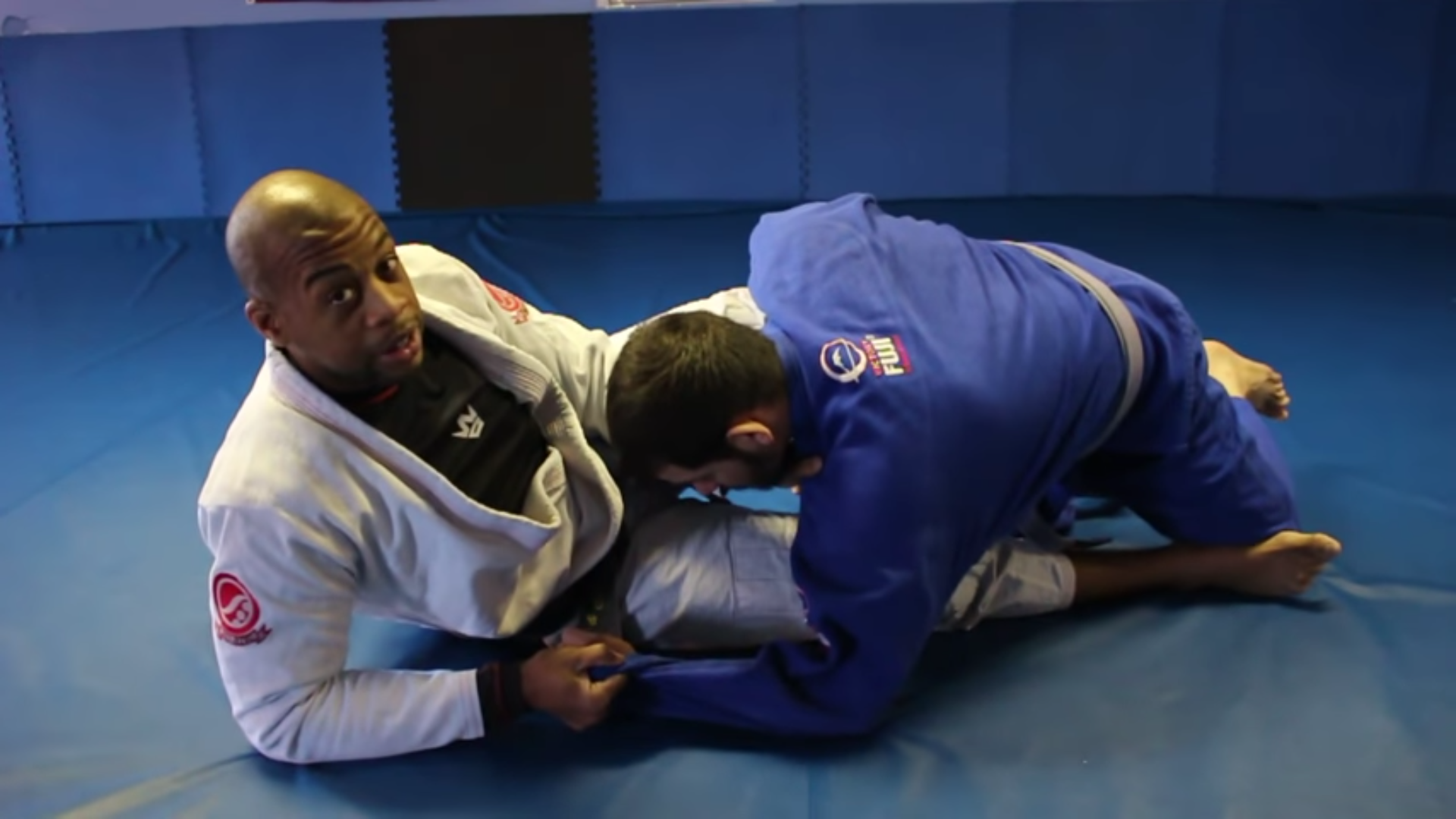
In the gi, the loop choke becomes available any time you have a cross collar grip and your opponent’s head is lower than yours. That second condition is the one most people miss. The grip alone does not give you the choke. The grip plus the head position is what makes it happen.
The video below covers three core principles that determine whether the loop choke works or falls apart. Watch it first, then read the breakdown below.
How to Know Your Cross Collar Grip Is Actually in the Right Place
Two quick tests tell you whether your grip is placed correctly. First, align your index finger with your opponent’s collar bone. Second, pull the grip toward their head and check whether your thumb lines up near their chin. If both of those line up, your grip is where it needs to be.
The wrist matters too. The wrist of your gripping hand should flex inward, toward your chest, the way your wrist naturally hangs when you hold a coffee mug. That position allows your forearm to wrap around your opponent’s neck more efficiently when you go to finish. A stiff wrist fights the geometry of the choke. A relaxed wrist works with it.
Why Head Position Is the Whole Game
That is why the goal is not just to get the grip. The goal is to take their head toward your primary grip and trap it against your hip or your ribs. When you do that, you block the escape route before they can use it. The video describes it as treating the finish like a guillotine, and that is a useful mental image. You are not strangling someone into submission. You are closing a door.
Any finish that works will share one thing in common. There is some obstacle, whether that is your hip, your elbow, or your body position, that prevents their head from ducking under your second grip. Find that obstacle and the choke becomes available. Ignore it and the choke disappears.
The Three Problems You Will Run Into and How to Handle Them
The second problem is posture. The choke requires your opponent’s head to be lower than yours. Some opponents will put their head there on their own without realizing it. Most will not. The most reliable way to get their head where you need it is to force a reaction. Sweep attempts work well here. When you threaten a sweep, your opponent reacts by posting or driving forward. Both of those reactions tend to bring their head down into range. You are not actually trying to sweep them. You are trying to trigger the movement that sets up the choke.
The third problem is securing the head once you have it. As a general principle, fall toward the side of your secondary grip when you go to finish. If you can get onto that hip, you can use your elbow to block their head even in situations where you cannot tuck it against your first grip. That elbow creates the obstacle that the choke depends on.
A Note on Why This Technique Suits Jiu Jitsu Beginners Well
The loop choke is not a move that requires speed, strength, or a specific body type. It requires an understanding of position and a willingness to be patient.
You set the grip. You wait for or create the right head position. You finish. That sequence can be learned step by step, and once you understand why each piece matters, the whole thing becomes logical rather than mechanical.
That is actually a good description of how jiu jitsu works in general. The techniques that last are the ones built on principles you can understand and repeat. The loop choke is one of them.
Want to Learn Techniques Like This in Person?
At 2nd Gear Jiu Jitsu and Muay Thai in Laurel, Maryland, this is exactly how we teach. Each technique comes with context, not just steps. You learn why something works so that you can apply it when the moment shows up in a real roll.
If you are curious about training, we offer a free trial class for new students. Come in, see how we teach, and find out if this is something you want to build on.
YOUR FIRST WEEK IS FREE
If this got you thinking, come in and find out.
Your first week is free. No gear. No experience. No commitment until you decide.
No commitment required. No gear needed.
Keep Reading
More from 2nd Gear

Key Jiu Jitsu Positions and Why They Matter
Jiu Jitsu makes a lot more sense once you understand position. This is the foundation everything else builds on.

Why Most Adults Never Start Jiu Jitsu (And Why You Should)
The reasons most adults give for not starting Jiu Jitsu sound reasonable. They’re not. Here’s what’s actually going on.
What to Expect in Your First Adult Jiu Jitsu Class in Laurel
Starting something new is uncomfortable. Starting something new where people are trying to pin you to the ground is a different level. Here’s exactly what to expect.